
May 7, 2012

May 2, 2012
DIK and Kisieland at the Museum of Modern Art in Warsaw

[English text below]
Prezentacja najnowszego numeru magazynu DIK Fagazine "BEFORE '89" połączona z premierowym pokazem dokumentu Karola Radziszewskiego "Kisieland"
9 maja (środa), 19:00
Muzeum Sztuki Nowoczesnej w Warszawie
ul. Pańska 3, Warszawa
Ostatni numer DIK Fagazine jest zwieńczeniem wielu podróży i spotkań, podczas których twórcy magazynu zbierali narracje o życiu homoseksualistów w komunistycznej Europie Środkowo-Wschodniej.
Podczas spotkania w Muzeum Tomasz Basiuk (Ośrodek Studiów Amerykańskich Uniwersytetu Warszawskiego) opowie o zagrożeniach związanych z błędami metodologicznymi, sporami interpretacyjnymi i możliwością ujawnienia wrażliwych informacji w badaniach archiwalnych dotyczących mniejszości seksualnych. Natomiast Magda Szcześniak (Instytut Kultury Polskiej UW) zada pytanie o potrzebę i możliwość tworzenia, pisania i pokazywania historii queer, opowie też o wyzwaniach i pułapkach związanych z takim przedsięwzięciem oraz przyjrzy się wizji queerowej przeszłości w numerze "BEFORE '89" magazynu DIK Fagazine.
Na spotkaniu premierowo zaprezentowany zostanie dokument Karola Radziszewskiego "Kisieland" - zapis spotkania artysty z Ryszardem Kisielem, twórcą "Filo" (pierwszego gejowskiego zina wydawanego w Europie Środkowo-Wschodniej). Osią filmu jest ukryte dotychczas archiwum - dziesiątki kolorowych slajdów dokumentujących sesje fotograficzne, które Kisiel realizował ze swoimi znajomymi, w prywatnym mieszkaniu jednego z nich. Zdjęcia powstały na przełomie 1985 i 1986 roku, jako bezpośrednia reakcja na milicyjną akcję „Hiacynt“, polegającą na zbieraniu przez Służbę Bezpieczenstwa materiałów o polskich homoseksualistach i ich środowisku, niejednokrotnie w celu szantażu. Radziszewski zaprosił Kisiela do swojej pracowni, gdzie ten po dwudziestu pięciu latach zdecydował się ponownie wcielić w rolę twórcy, stając oko w oko z wynajętym modelem.
www.artmuseum.pl
***
Launch event of the latest issue of DIK Fagazine "BEFORE '89" combined with a premiere screening of Karol Radziszewski's documentary film "Kisieland"
May 9 (Wednesday), 7pm
Museum of Modern Art in Warsaw
Panska 3, Warsaw
The latest issue of DIK Fagazine "BEFORE '89" is the culmination of a number of travels and meetings, during which the editors of the magazine collected stories and narrations about gay life in communist countries in East-Central Europe.
During the event at the Museum of Modern Art in Warsaw Tomasz Basiuk (American Studies Center, University od Warsaw) will discuss the dangers of archival research concerning sexual minorities - methodological mistakes, disputes over interpretations and the possibility of disclosing sensitive information. Magda Szcześniak (Institute of Polish Culture, University of Warsaw) will inquire about the need and possibility of writing and showing queer history and ask about the challenges and dangers of such projects. She will also analyze the vision of queer past and 'queer temporality' in the "BEFORE '89" issue of DIK Fagazine.
The event will also feature a premiere screening of Karol Radziszewski's "Kisieland" - a documentary film presenting Radziszewski's meeting with Ryszard Kisiel, the creator of "Filo" (the first East-Central European gay zine). The backdrop of the film is Kisiel's hitherto hidden archive, consisting of dozens of colour slides, documenting photo shoots organized by Kisiel and his friends in a private apartment. The photos were taken in 1985 and 1986 and can be considered a direct reaction to the anti-gay militia campaign ("Hiacynt"), during which the Secret Police collected materials about polish gays, often using them for blackmail. Radziszewski invited Kisiel to his studio and asked the editor of "Filo" to reenact the creative process of his photo shoots from twenty-five years ago with the help of a hired model.
www.artmuseum.pl

DIK. Archiwum

[English text below]
DIK Fagazine serdecznie zaprasza na wystawę:
DIK. Archiwum
wernisaż: 08.05.2012, godz. 19:00 (wtorek)
Wystawa potrwa do 9 czerwca
Galeria Kolonie
ul. Bracka 23 m. 52, Warszawa
www.galeriakolonie.pl
Wystawa DIK. Archiwum próbuje pokazać fenomen magazynu „DIK" i ustalić jego miejsce we współczesnym pejzażu kulturowym. A jest to nieoczywista lokalizacja: „DIK" nie jest ani tradycyjnym magazynem o sztuce, ani tak modnym ostatnio art-zinem; wychodzi też poza obszar zrytualizowanego już self-publishingu, posiadając stałe i szerokie grono odbiorców oraz sieć dystrybucji obejmującą niemal cały glob. Jednocześnie „DIK" nie pasuje do segmentu zachodniej prasy skupionej na homoseksualności i męskości, tytuły te bowiem, nawet jeśli wychodziły z pola kultury niezależnej, w olbrzymiej większości uzupełniają dziś rynek pism z gatunku glamour. Z kolei magazyny, które pozostały w podziemiu, uderzają powtarzalnością i schematycznością ujęć. Jedno jest pewne: „DIK" sytuuje się na przecięciu gatunków i mediów, wygospodarowując sobie całkowicie autonomiczną przestrzeń. Odpowiedź na pytanie o przyczynę takiego stanu rzeczy jest prawdopodobnie prosta: redaktorem naczelnym i założycielem „DIK-a" jest Karol Radziszewski, dla którego naturalną przestrzenią działania jest pole sztuki. To dlatego najlepszym rozwiązaniem jest być może uznanie „DIK-a" po prostu za artystyczne medium, bądź precyzyjniej - za rodzaj bytu posługującego się narzędziami i logikami z obszaru sztuki. Praca nad kolejnymi numerami stanowiącymi zamknięte całości może przypominać konstruowanie wystaw, zaś różnorodność środków i ujęć stosowanych przez redakcję - instrumenty kuratorskie. Z kolei fakt, że „DIK" skupia się na środkowo-europejskim obszarze geograficznym, czyni z niego projekt badawczo-artystyczny opowiadający za pomocą języka sztuk wizualnych o zagadnieniach z obszaru socjologii czy politologii. W tym ujęciu byłoby to jedyne w swoim rodzaju laboratorium nienormatywnych wzorców męskości na obszarze byłego bloku komunistycznego. Całości obrazu dopełnia niezwykła dbałość o plastyczny wyraz magazynu, progresywna szata graficzna zaprojektowana przez Monikę Zawadzki, a także wyraźna obecność artystów sztuk wizualnych w kolejnych numerach.
Wystawa obejmuje archiwa magazynu gromadzone od momentu jego powstania, a także wyjątki z archiwum podziemnego zina „Filo", pierwszego homoseksualnego periodyku funkcjonującego w PRL-u. Pokaz uzupełnia rysunek Karola Radziszewskiego wykorzystany jako jedna z okładek pisma oraz plakaty Moniki Zawadzki tworzone przy okazji wydarzeń związanych z „DIK-iem". Tak skonstruowana ekspozycja nie tylko pozwala prześledzić kolejne etapy funkcjonowania magazynu, ale przede wszystkim wydobyć metodę i logikę działania jego autorów.
FB: http://www.facebook.com/events/447056528642667
Następnego dnia po wernisażu w galerii Kolonie zapraszamy do Muzeum Sztuki Nowoczesnej na prezentację najnowszego numeru magazynu „DIK" połączoną z premierowym pokazem dokumentu Karola Radziszewskiego „Kisieland".
9 maja, godz. 19:00, Muzeum Sztuki Nowoczesnej, ul. Pańska 3
***
DIK Fagazine is happy to invite you to the exhibition:
DIK. Archive
opening: May 8, 2012, start: 7pm
exhibition open until June 9
Kolonie Gallery
Bracka 23 m. 52, Warsaw, Poland
www.galeriakolonie.pl
The DIK. Archives exhibition attempts at presenting the phenomenon of the "DIK" magazine and establishing its place in the contemporary cultural landscape. It is not an easy task, though, since "DIK" is neither a traditional art magazine, nor an art-zine, which is the latest trend; "DIK" evades the ritualized self-publishing approach, has a regular and wide group of recipients as well as a distribution network covering almost the entire globe. At the same time, "DIK" stands out from the bulk of western press, which focuses primarily on homosexuality and masculinity, and which, even if pertaining to the field of independent culture, ends up being piled with glamour-oriented magazines. On the other hand, however, magazines which remained in the underground strike us as being highly repetitive and conventional. One thing remains certain: "DIK" places itself on the verge of various genres and media, generating a completely autonomous niche. The answer to the question regarding this state of affairs is probably quite simple: the editor-in-chief and the founder of "DIK" is Karol Radziszewski, for whom the field of the arts is the natural field of activity. Hence, the best solution is to simply assume that "DIK" is an artistic medium, or, to be more precise, an entity making use of the tools and logics the field of the arts has to offer. The creation of the following issues, which form closed entities, may seem like the arrangement of exhibitions, and the variety of resources and takes applied by the editorial staff may seem like the instruments applied by curators. The fact that "DIK" focuses on the Eastern-European geographical area makes it a research & artistic project speaking about issues related to sociology and political science in the language of the visual arts. In this context, this would be a particular laboratory of non-normative models of masculinity on the territory of the former Eastern Bloc. The picture is completed by an incredible attention at the visual impact of the magazine, progressive graphic layout designed by Monika Zawadzki, as well as express presence of visual artists in the following issues.
The exhibition presents the archives of the magazine, gathered and stored from its foundation, as well as excerpts from the archives of "Filo", an underground zine and the first homosexual periodical functioning the Communist era. One of the exhibits is a drawing by Karol Radziszewski, used as a magazine cover. Moreover, the exhibition contains posters created by Monika Zawadzki to "DIK"-related events. An exhibition constructed in this manner allows us not only to trace the following stages of the magazine's operation, but also to extract the methodology and the logics of the decisions of its authors.
A presentation of the latest issue of "DIK", accompanied by a premiere screening of Karol Radziszewski's documentary entitled "Kisieland" shall take place in the Museum of Modern Art in Warsaw on the day following the opening of the exhibition at the Kolonie Gallery.
May 9, 7:00 p.m., Museum of Modern Art, Pańska 3 Str.

April 16, 2012
Douglas Crimp in Warsaw
Prof. Douglas Crimp, z którym w ostatnim numerze DIK Fagazine rozmawiamy o jego podróży do Polski i Czechosłowacji w latach 80tych, przybywa dziś do Warszawy. Polecamy jego wykład:
"Art News Parties"
16 kwietnia (poniedziałek) o godz. 18
stary budynek BUW, sala 6, Warszawa
Wykład organizowany jest przez Instytut Historii Sztuki i Ośrodkek Studiów Amerykańskich, we współpracy z Muzeum Sztuki w Łodzi.
Wykład odbędzie się w języku angielskim.
Art News Parties
"Art News Parties" is a chapter of Douglas Crimp’s memoir-in-progress about New York in the 1970s, Before Pictures. The memoir weaves together stories of the two cultures that were central to his life at that time—gay liberation and the art that came to be called postmodernism. In this chapter, Crimp remembers his first work as an art critic, when he wrote for the oldest and most established American art magazine, Art News. Art News was famous for its support of Abstract Expression and for its preference for criticism written by poets, especially the important New York School poets John Ashbery, Barbara Guest, Frank O’Hara, and James Schuyler. But Crimp was not a poet, and he found the poets’ views about early-1970s art old-fashioned and off-putting. He nevertheless found the milieu convivial, especially as experienced at parties hosted by Ashbery, Art News’s executive editor. One of those parties led indirectly to Crimp’s meeting his first boyfriend, and so this chapter also tells the story of their relationship, including their shared cinephilia, their project to write a Moroccan cookbook, and their ill-fated vacation on Cape Cod.
Douglas Crimp is Fanny Knapp Allen Professor of Art History at the University of Rochester, New York, and the author of On the Museum’s Ruins, 1993, Melancholia and Moralism: Essays on AIDS and Queer Politics, 2002, and “Our Kind of Movie”: The Films of Andy Warhol, 2012. Crimp was the curator of the Pictures exhibition at Artists Space, New York, in 1977 and an editor of October magazine from 1977 to 1990. With Lynne Cooke, he organized the exhibition Mixed Use, Manhattan: Photography and Related Practices 1970s to the Present for the Reina Sofía in Madrid in 2010. He is currently at work on a memoir of New York in the 1970s called Before Pictures.
April 6, 2012




April 2, 2012
DIK at Motto Berlin

DIK Fagazine "BEFORE '89" issue launch at Motto Berlin
April 5 (Thursday), start 7 PM
Motto Berlin
Skalitzer str. 68, Berlin
DIK Fagazine is happy to invite you for the Berlin premiere of our "BEFORE '89" issue at Motto. Join us for a launch event with editor Karol Radziszewski and Berlin based artist Piotr Nathan who is interviewed in this issue.
The latest issue of DIK Fagazine, "BEFORE '89," is the culmination of extensive archive work, as well as travels across Europe. Drawing from a range of contributors, the magazine traces a cultural legacy specific to Poland, while following a trail through Romania, Estonia, Latvia, Serbia, Hungary and the Czech Republic.
Wolfgang Tillmans, who first visited Warsaw in 2011, provides an account of the anniversary of the plane crash in Smolensk, celebrated in the overblown national-religious vein of the Polish right. Bruce LaBruce’s contribution gives the impression that he's describing a time when communism is alive and well, and not Poland in the year 2000.
The publication explores park cruising areas, train stations, beaches and other casual hook-up spots. Ryszard Kisiel shares the astonishing story of his zine titled "Filo", Slava Mogutin uncovers the story of homosexuals in the Soviet Gulags, and BEFORE ‘89 conducts a search investigation for Michel Foucault’s Polish lover.
Contributors of DIK Fagazine 8th issue include Arobal, Wojciech Bąkowski, Bruce LaBruce, Boris L. Davidovich, Andrej Dubravsky, Paul Dunca, Christine Fenzl, Nan Goldin, Kamil Julian, Ryszard Kisiel, Slava Mogutin, Jaanus Samma and Wolfgang Tillmans.
DIK Fagazine is available at Motto Berlin or online here: http://mottodistribution.com/shop
On the picture: spread from DIK Fagazine No 8 / Piotr Nathan by Christine Fenzl and Nan Goldin
March 31, 2012
DIK in Wroclaw


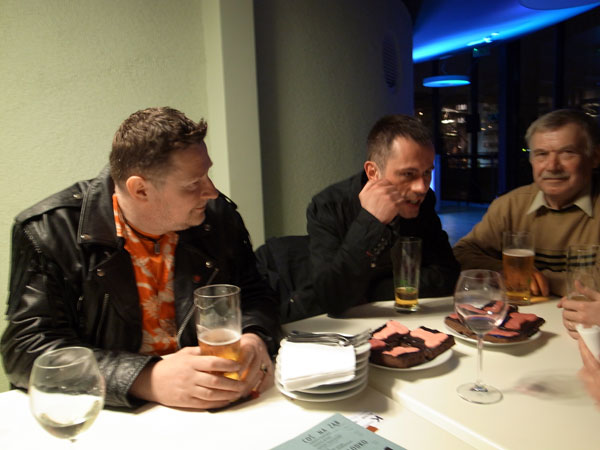


Yesterday's event was great fun so thanks for that Wroclaw! Sledzik and Juanitta shared a brilliant stories with us and DIK cakes prepared by the CLUB-MUSEUM were delicious. Yummy!
Subscribe to:
Posts (Atom)